Every course is a quest map. Students move session by session — predict, watch, reflect, show what they know, and lock in a next step — with a progress bar that makes finishing feel possible.
One step at a time!
A quest map down the side, one activity at a time in the middle, and the instructions always in view. Students never have to guess what to do next.
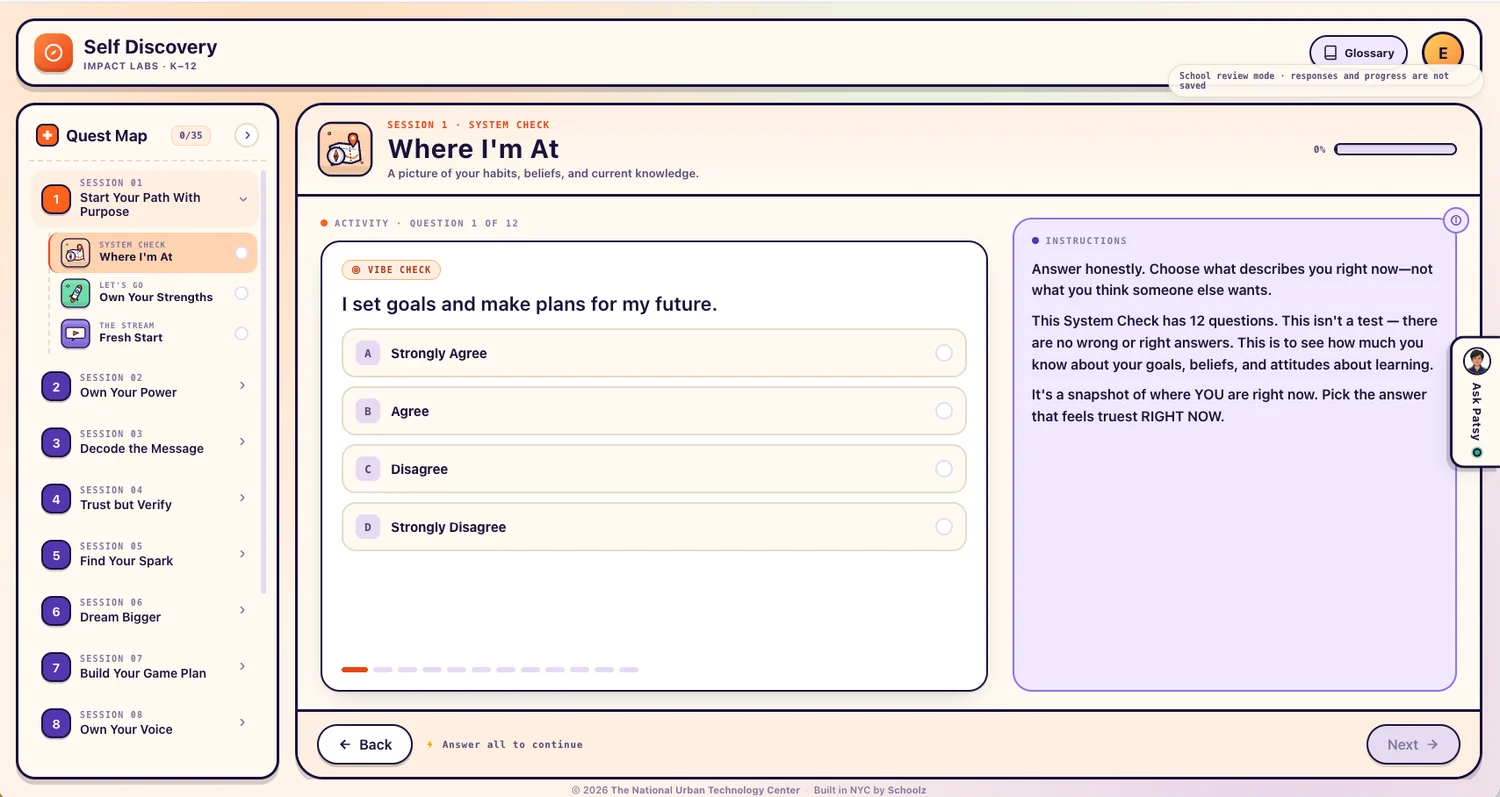
Every session and activity in the course, always visible, with a running count of how many are done.
What to do sits beside the activity, not buried in a handout that went home in a backpack.
A bar on every activity and a counter on the course, so students can see the finish line.
Course vocabulary one tap away, so an unfamiliar word doesn't end the lesson.
Sessions mix activity types on purpose, so a class is never forty minutes of the same thing.
A no-wrong-answers snapshot of habits, beliefs and current knowledge. Runs at the start and again at the end, so growth is visible.
The warm-up that gets a class talking before the main idea arrives.
Video in three deliberate steps. Students commit to a prediction first, so they watch looking for something.
A deliberate look back at earlier sessions, because recall is what moves a lesson into long-term memory.
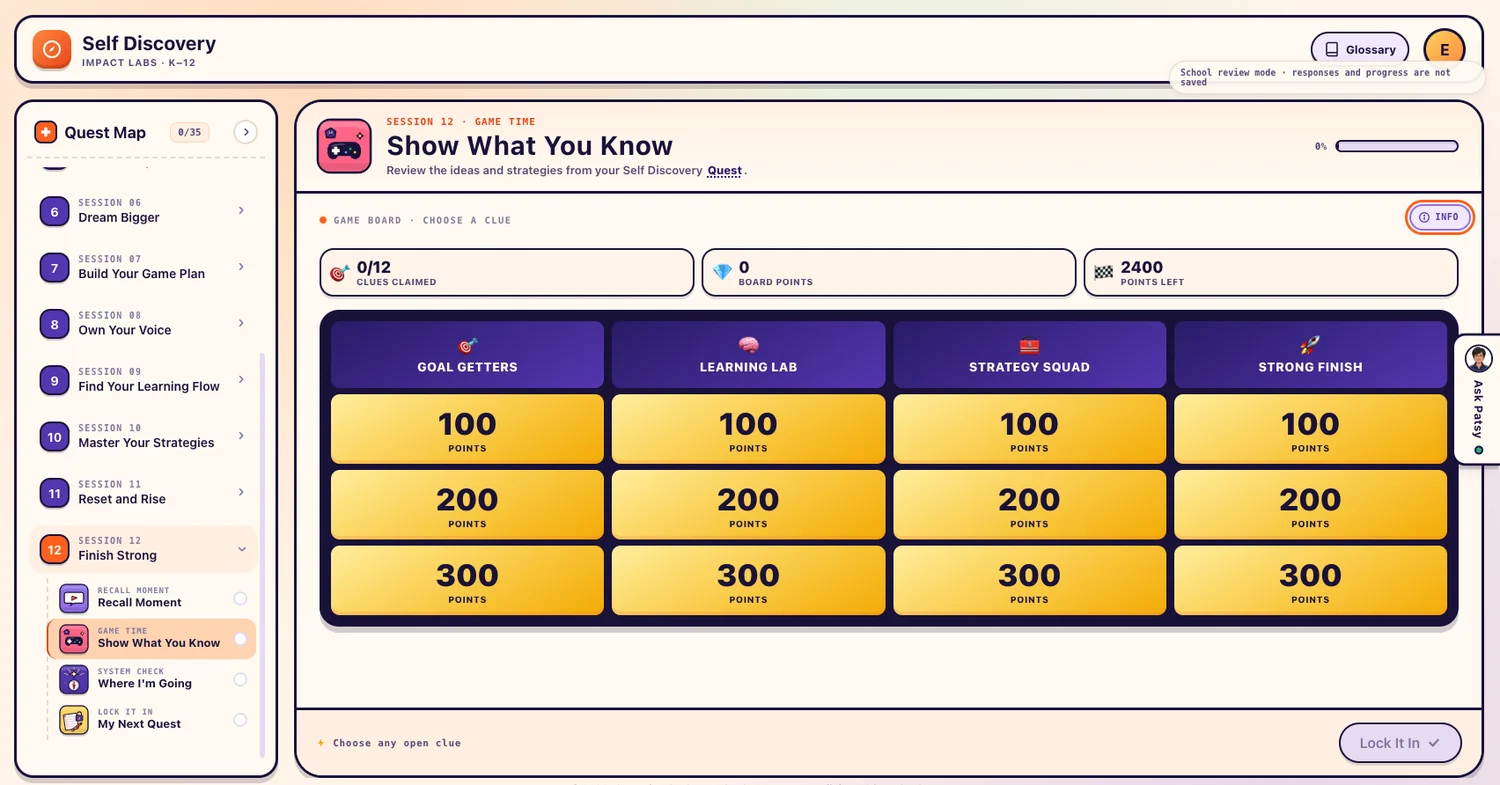
A points board that turns review into something a class will actually ask to play.
Every session ends with the student writing down what they'll do next, not just what they learned.
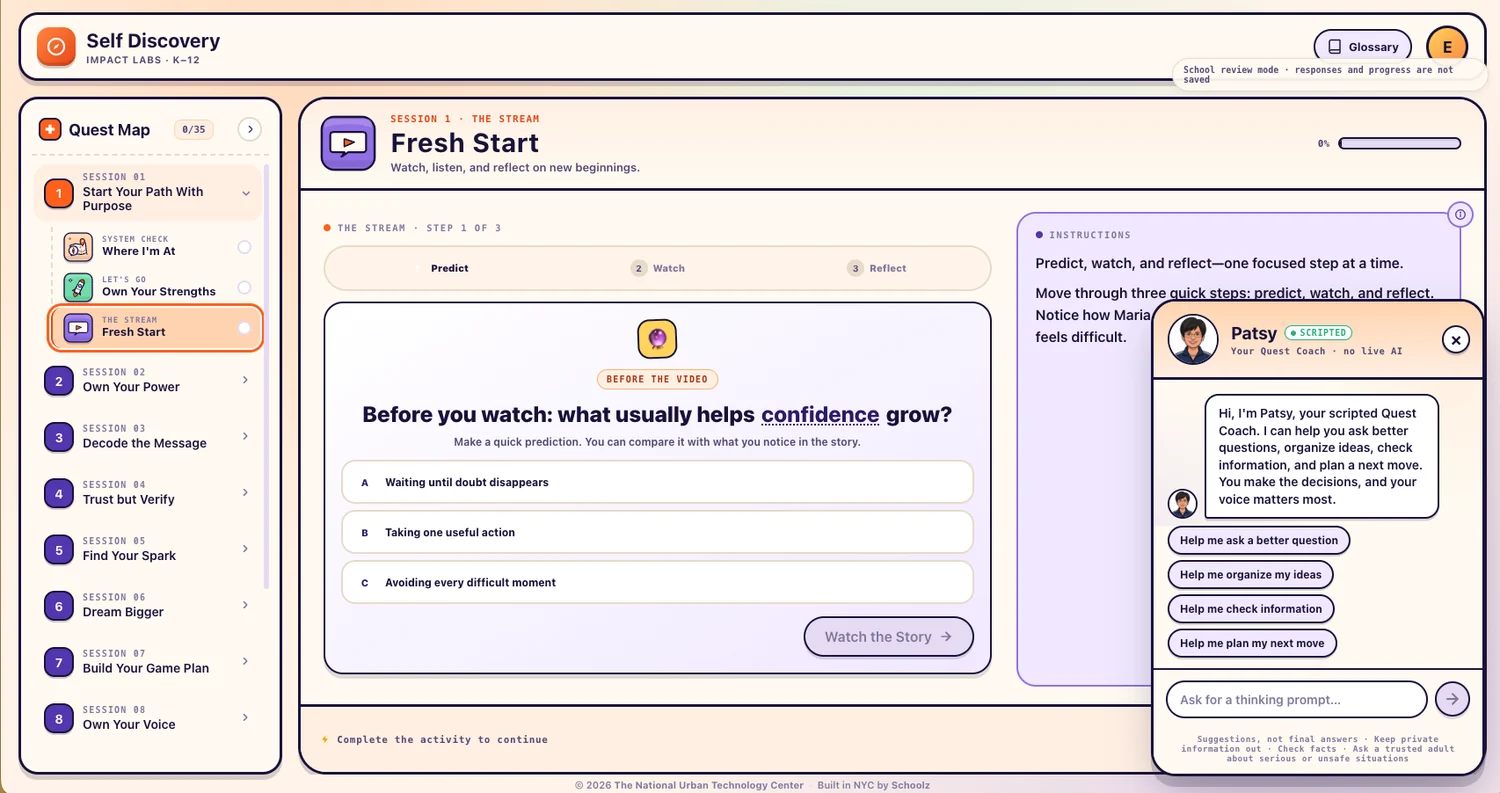
Predict, then watch, then reflect — one focused step at a time. Students make a call before the video starts and compare it with what they noticed.
Patsy helps students ask a better question, organize their ideas, check information and plan a next move — with thinking prompts, not answers. As Patsy puts it: you make the decisions, and your voice matters most.
Patsy is scripted on purpose. There is no live model improvising at a child, which is the question every district asks first. Students are reminded to keep private information out, to check facts, and to bring anything serious or unsafe to a trusted adult.
What a student can ask for
Suggestions, not final answers · Keep private information out · Check facts · Ask a trusted adult about serious or unsafe situations
Game Time turns the end of a unit into a points board: categories across the top, clues underneath, and a running tally of what's been claimed and what's still on the table.
Walk the whole course before students do. Responses and progress aren't saved, so nothing you click while previewing lands in a record.
Activities open in order and ask to be completed before the next unlocks, so a class moves together instead of racing to the end.
Completion tracked per activity and per course, so "how far is this class" is a glance rather than a spreadsheet.
Courses carry your organization's name and colors, not ours — it reads as your program, because it is.
We build the sessions with you — the content, the videos, the questions and the review game — rather than handing over an empty platform.
Nothing to install on a cart of Chromebooks — students open a link and pick up where they left off.